The case behind the legend
Carl Tanzler’s macabre relationship with the body of a young woman becomes a matter of public record in Key West—the real event at the heart of the novel’s most unbelievable thread.

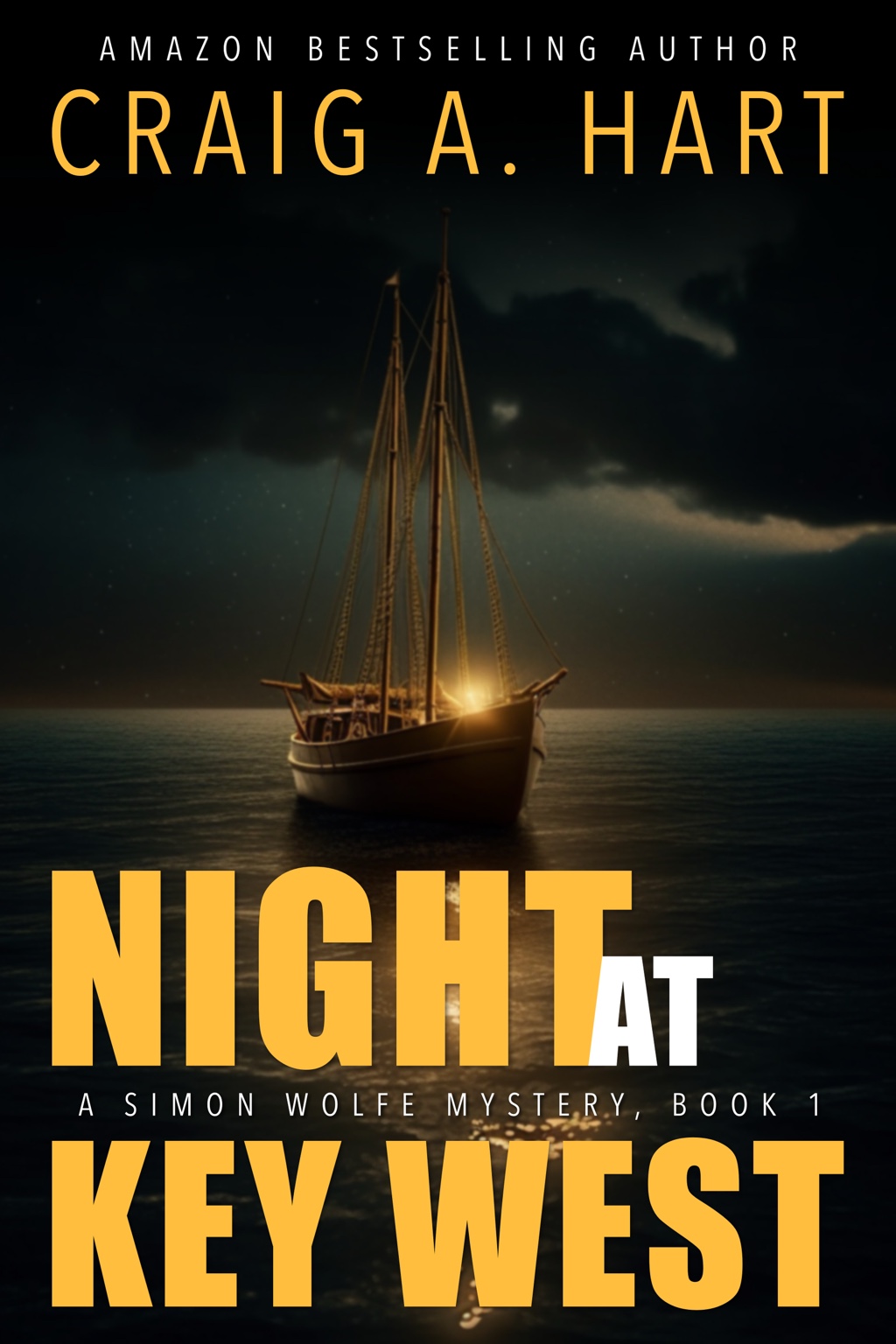
Book clubs & historical mystery
A companion for readers ready to explore 1937 Key West, the true events behind Carl Tanzler’s macabre story, and the line between historical record and thriller invention.
Book club companion
Use this guide to explore the real history beneath Night at Key West—and the deliciously uneasy question of whether fiction can ever outdo what actually happened.
The historical trail
A short orientation before the conversation begins.
Carl Tanzler’s macabre relationship with the body of a young woman becomes a matter of public record in Key West—the real event at the heart of the novel’s most unbelievable thread.
The novel’s setting is a carefully reconstructed island world: hot streets, close neighborhoods, working waterfronts, local loyalties, and a community where everyone seems to know everyone.
Ernest Hemingway really lived in Key West during this period. The author’s note identifies his home, fight nights, and several local encounters as grounded in history.
The story uses the Overseas Highway as part of its movement between island and mainland, while acknowledging that the road was still under construction at the time.
Sloppy Joe’s, the Overseas Hotel, Pepe’s, the Electric Kitchen, and other locations in the novel actually existed—and help make the island feel like more than a backdrop.
The mystery is fiction, but its people, places, anecdotes, and situations draw from history and contemporary newspaper accounts. The guide’s best question is where the line matters—and where it does not.
World behind the story
The author’s note is your map. Start with the documented history, then look at how the novel transforms it.
The author’s note says Tanzler’s macabre episode with a corpse is a matter of record. The novel builds a fictional mystery around that documented event.
Tanzler was not invented for the book. His presence gives the story its unsettling center—and makes the unbelievable feel historically possible.
Hemingway lived in Key West, and the author took care with his portrayal, including the house and the fight-night setting. The conversations and story events are still part of the novel’s fiction.
The detective, the murder investigation, and the solution give the historical material a thriller structure. They are the imaginative architecture around the real-world material.
The author identifies the Overseas Hotel, Sloppy Joe’s, Pepe’s, the Electric Kitchen, and other places as actual Key West locations faithfully described as possible.
The novel has Wolfe and Hemingway drive the completed route, while the author notes that the highway was not entirely finished in 1937. It is a useful example of fiction smoothing history for story.
Discussion room
Begin with the historical premise, then unlock the full-book questions when everyone is ready.
Why do the true elements feel more unbelievable than the invented mystery?
Suggested format: spend 15 minutes on the author’s note and true-history thread, 20 minutes on the setting, and the rest on character, mystery, and the novel’s idea of truth.
Bring the author into the room
Invite Craig for a discussion about historical mystery, Key West, Hemingway, or the true events behind Night at Key West.
Ask about a visit